
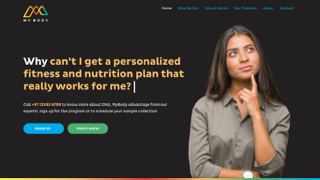
This case study highlights a behavioral science-driven research project conducted for a health-tech company entering India with a precision health offering based on DNA and microbiome testing. Our mandate was clear: uncover consumer insights, design a go-to-market strategy, and outline the emotional and behavioral barriers that would shape product positioning, feature design, and communications.
Our approach combined:
What we uncovered shaped not only the product roadmap—but the entire conversion architecture. Here's how we did it.

"My health graph is my life graph." – Male, 41, Bangalore
Urban India is experiencing a slow-burn epidemic: lifestyle diseases like obesity, PCOS, diabetes, and hypertension are increasingly common—but dangerously normalized. Health is rarely proactive; it becomes a focus only after a breakdown. And even then, people seek quick fixes rather than sustained change.
Our client—a genomics and microbiome testing company—sought to introduce a precision health platform that could help users make more personalized, preventive decisions using their biology.
But in early testing, we found something surprising. The term “DNA testing” triggered fear, not curiosity.x To most, it meant paternity disputes, crime investigations, or foreign tech.e Even among medical professionals, knowledge of genomics-based prevention was minimal. We weren’t just introducing a product. We were confronting cultural stigma, knowledge gaps, and identity beliefs around health.
We conducted in-depth interviews with high-income, urban Indians living with chronic conditions. What emerged was a recurring theme:
Health wasn’t seen as a routine—it was a reaction. A collapse. A wake-up call. Many participants described the onset of symptoms—not goals—as the start of their health journey.
“I didn’t feel right. I couldn’t focus. That’s when I got scared.”
For most, health was deeply emotional, tied to their performance and self-worth:
We also uncovered a mental model:
“Life expands and contracts to accommodate your fitness levels.”
When people were unwell, they withdrew. They skipped social gatherings, dropped habits, avoided mirrors, and became invisible—even to themselves. This insight reframed our approach entirely. DNA was not a test.v It had to become a mirror. A narrative tool. A reason to believe.

Given the novelty of genomics and gut microbiome testing, we realized that direct conversion would fail. We needed to first build comfort, understanding, and trust.
Our recommendation: design the funnel as a journey of education → personalization → transformation.
Key behaviourally driven shifts we proposed:
DNA perceived as legal/criminal → Reframe as “body blueprint,” “personalized roadmap”
Health seen as reactive → Shift from goals (I want to run a marathon) to identity systems (I am a diabetic marathoner)
No habit formation scaffolds → Introduce coaches, daily rituals, and micro-habits
Cultural food & relapse cycles → Design for relapse resilience, not just discipline, we called this the Chhole Bhature Effect:
“I went from 90kgs to 73kgs. Then lockdown happened and my sister came down from Orissa. She makes very good Chhole Bhature. Now I am 84kgs.”
This wasn’t a failure—it was family cultural. So the product had to provide slack, people are human, they slip, the secret was in providing an opportunity to get back on track.
Based on the insights, we designed a precision health ecosystem that paired diagnostics with:
We embedded growth mindset principles:
“When I saw my inflammation markers, it scared me. But when my coach said, ‘We can reverse this,’ it changed how I felt about myself.”r — Female, 36, Mumbai
This approach shifted user engagement from:
This could not have been not have been a mass-market product, at least not yet. This is a solution for an affluent, urban segment ready to invest in longevity, performance, and personalization.
📈 Market Sizing: High-Income Indians with Lifestyle Conditions
Serviceable Affluent Market: ~3.7 million Estimated SOM (10% over 5 years): ~370,000 users Avg Annual Revenue per user: $1,000 Market Potential: $370M+
This market is growing. It is health-conscious, digitally native, and behaviorally primed. But it doesn’t need another app. It needs a system it can belong to.
This case demonstrated that:
We weren’t building a campaign. We were building a bridge between science and selfhood.
If your product asks someone to change their life, you’re not designing for their biology. You’re designing for their belief system.
People don’t want to be fixed. They want to be understood.