Every business problem that looks like a strategy problem, a technology problem, or a market problem eventually reveals a human problem underneath.
The strategy that did not execute. The product nobody adopted. The change programme that reverted the moment attention moved elsewhere.
Most firms treat these moments as failures to manage. We treat them as the most precise diagnostic signal available. The break tells you exactly where the system is under strain. Fix the right thing — not the presenting symptom but the actual failure — and the repair makes the business more resilient and more distinctive than it was before.
This is the idea behind kintsugi. The Japanese art of repairing broken objects with gold, making the repaired piece more beautiful and more valuable than the original. You would not want it unbroken anymore.
It is also the idea behind BCX Design.
Where we came from
Came to this through banking and financial analysis.
Working inside one of the largest retail banks in North America, then watching the same institution try to understand why customers were not achieving their financial goals despite having access to the right products and the right advice. Customer experience mapping gave the first answer — the journey itself was the problem. Behavioural science gave the deeper one — culture and context shape behaviour more reliably than products and advice do.
The discipline of not moving forward until the data is properly understood, until the problem is correctly framed, until the narrative holds — that came from years of working in a world where getting the diagnosis wrong has measurable financial consequences.
Came to this through the social impact sector.
Running a full-scale organisational transformation across eleven programme areas — theory of change, technology implementation, culture change, external communication, stakeholder negotiation across an entire institution — without knowing at the time that it was behavioural design. It only became clear years later when the vocabulary of behavioural science arrived and named something that had already been lived.
The rigour of performance measurement. The reality of change resistance. The gap between what an organisation says it wants to do and what it is actually capable of doing. These were not academic concepts. They were operational realities that had to be navigated without a framework.
How we work
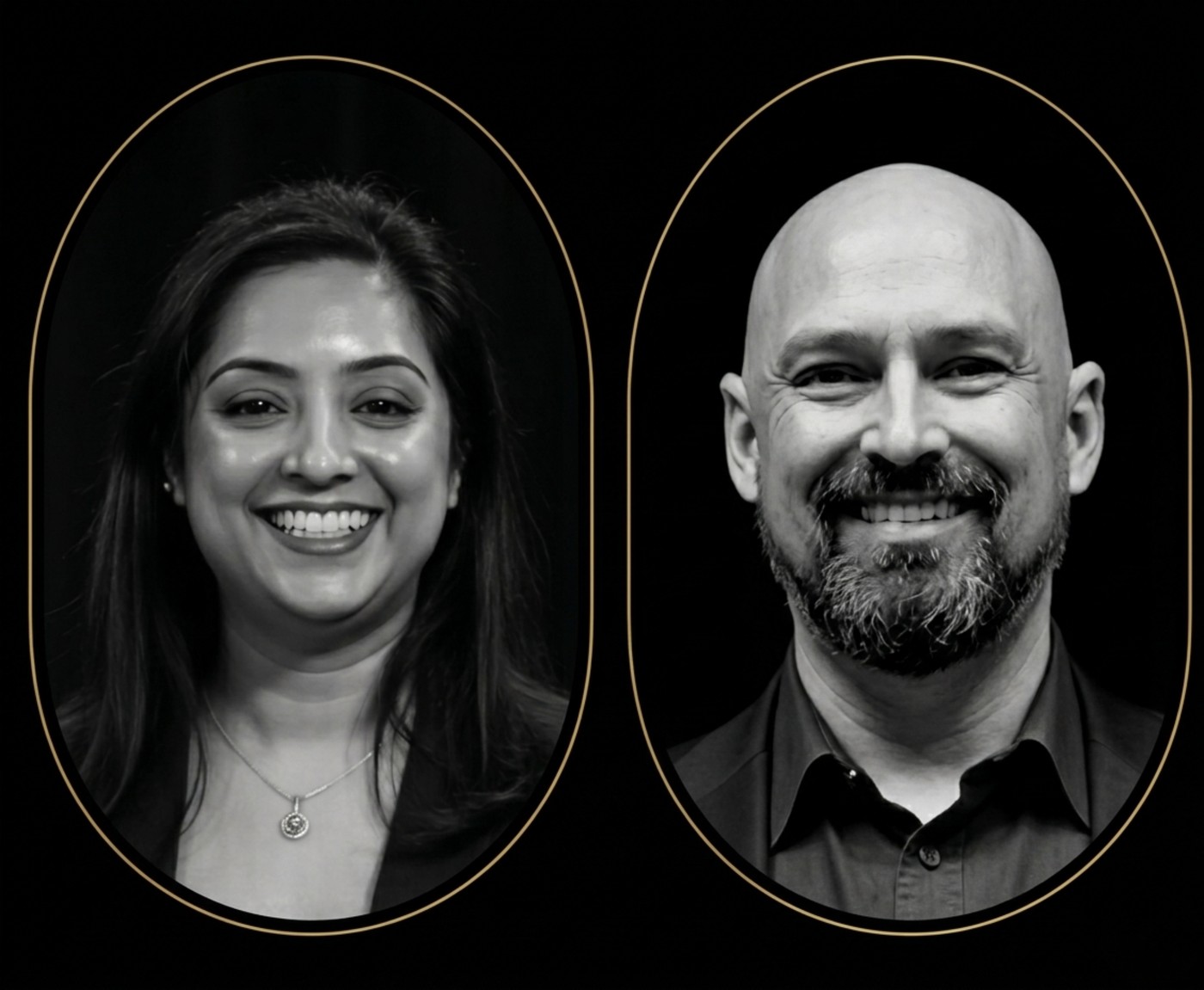
One of us reaches for the data first.
The workflow, the process broken into its components with a narrative overlaid. The problem is not properly understood until that picture is clear — and nothing gets prescribed until it is.
The other reaches for the reality of the engagement itself.
Understanding what a client is genuinely trying to achieve, where the energy and appetite for change actually sits within the organisation, and what conditions need to be in place for the work to produce a real result rather than a good-looking recommendation.
Between these two instincts — diagnostic rigour and commercial clarity — BCX Design applies the same standard of evidence to understanding a problem that it applies to solving one.
Behavioural science is a powerful tool. We apply it in the interest of the people it is ultimately designed to serve — the customer, the employee, the user. Not against them.
It starts with understanding exactly what is broken and why.
Book a CallA first conversation costs nothing and commits you to nothing.
We will tell you honestly whether we can help.